
The Editorial Team is a collective of technology enthusiasts, computer network engineers, and industry professionals dedicated to creating meticulously curated content for a diverse readership. With a combined experience spanning several decades, our team distills complex technology topics into clear, informative articles. Whether it’s networking fundamentals, cutting-edge AI insights, or in-depth guides on blockchain technology, the Editorial Team strives to provide reliable information that advances the understanding of technology for everyone from students to seasoned professionals.

Editorial Team’s mission
The Editorial Team’s mission extends beyond mere reporting; we aim to be the architects of understanding, constructing bridges over the rivers of jargon and complexity. From the foundational bricks of networking to the ever-evolving skies of cloud computing, we guide you through the technological labyrinth.
We take pride in our meticulous attention to detail and our unwavering commitment to accuracy, ensuring that each piece of information is a thread in the vast tapestry of technological knowledge. As we chart the course through the evolving landscape of technology, we invite our readers to join us on this exhilarating journey of discovery and growth. Together, we not only explore the current terrain of technology but also anticipate the horizons of tomorrow’s innovations.
Our Latest Articles
-

V.90 – Modem Serial Transmission
V.90 is a serial transmission standard for high-speed communication using modems.
-

X Window System
X Window System is a client/server system for running a graphical user interface (GUI) that uses windows in a UNIX environment.
-

X-Series Protocols
X-Series Protocols, also known as X-Series recommendations, is a series of standards and recommendations developed by the International Telecommunication Union (ITU) relating to data communication over networking and telecommunication services.
-

XML
XML stands for Extensible Markup Language, a family of standards for the exchange of structured information that was developed by the World Wide Web Consortium (W3C).
-

Microsoft Internet Explorer
Internet Explorer is Microsoft’s web browser and integrated suite of client-side Internet software, which integrates tightly into the Microsoft Windows operating system and was included with Windows until version 7 as an essential operating system component.
-

XHTML
XHTML stands for Extensible Hypertext Markup Language, a proposed version of Hypertext Markup Language (HTML) from the World Wide Web Consortium (W3C).
-

x86 Platform
Definition of x86 Platform in Network Encyclopedia. What is x86 platform? x86 is a computer platform whose processor is based on the Intel 386 architecture microprocessor. The x86, or Intel, platform is one of the two processor platforms supported by Microsoft Windows NT and above (the other being the Alpha platform) and the only processor platform supported by…
-

Digital Certificate: A Comprehensive Guide
A Digital Certificate is a technology for verifying the identity of the user or service you are communicating with.
-
X.500
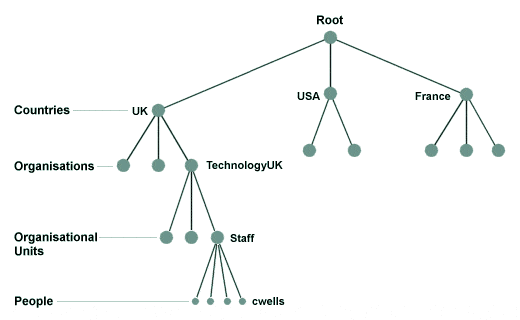
X.500 is a recommendation from the International Telecommunication Union (ITU) that specifies a global, hierarchical directory service.
-

X.400 Connector
Dive into the legacy of the X.400 Connector in Exchange Server: its pivotal role in early network messaging and enduring impact.
-

X.121 Address
In this article we are going to explore the legacy of X.121 Addresses, the backbone for connecting end nodes like computers or terminals to X.25 public data networks.
-
Zone Transfer
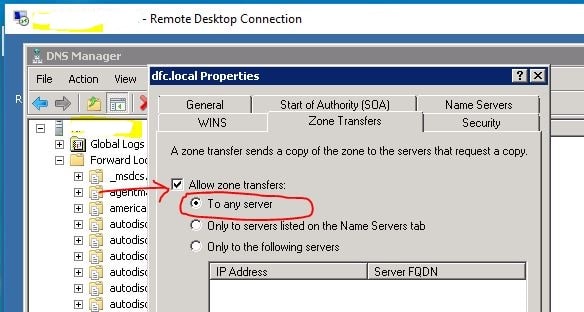
Zone Transfer (in a DNS Server) is the process of transferring information in the zone file on a primary name server to a secondary name server.