
The Editorial Team is a collective of technology enthusiasts, computer network engineers, and industry professionals dedicated to creating meticulously curated content for a diverse readership. With a combined experience spanning several decades, our team distills complex technology topics into clear, informative articles. Whether it’s networking fundamentals, cutting-edge AI insights, or in-depth guides on blockchain technology, the Editorial Team strives to provide reliable information that advances the understanding of technology for everyone from students to seasoned professionals.

Editorial Team’s mission
The Editorial Team’s mission extends beyond mere reporting; we aim to be the architects of understanding, constructing bridges over the rivers of jargon and complexity. From the foundational bricks of networking to the ever-evolving skies of cloud computing, we guide you through the technological labyrinth.
We take pride in our meticulous attention to detail and our unwavering commitment to accuracy, ensuring that each piece of information is a thread in the vast tapestry of technological knowledge. As we chart the course through the evolving landscape of technology, we invite our readers to join us on this exhilarating journey of discovery and growth. Together, we not only explore the current terrain of technology but also anticipate the horizons of tomorrow’s innovations.
Our Latest Articles
-

Username in networking
Dive into the fascinating world of usernames—a cornerstone of your digital identity. Explore its importance, types, security implications, and more in this comprehensive guide.
-
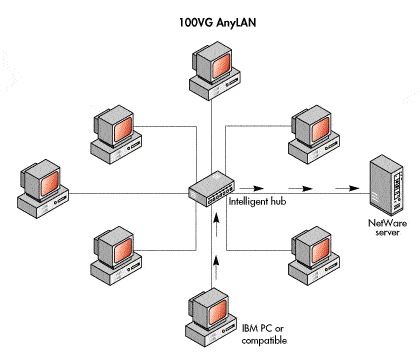
Intelligent Hub in Networking
Intelligent Hub is a hub that is enabled for remote monitoring and management through Simple Network Management Protocol (SNMP).
-
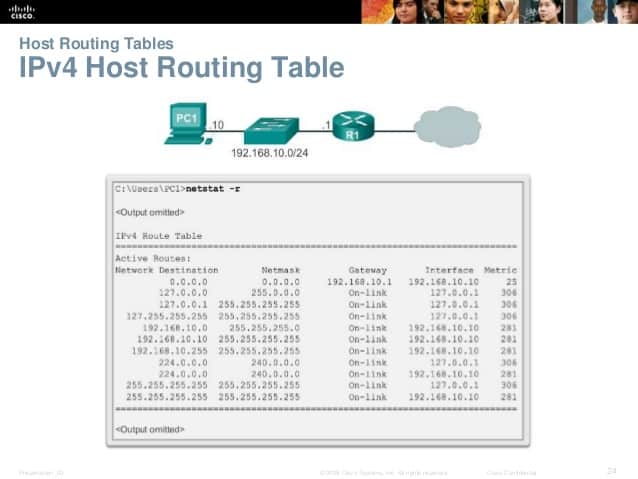
Host Routing
Host Routing is the routing process that occurs when a host (computer) on a network forwards a packet to a destination host on the network.
-
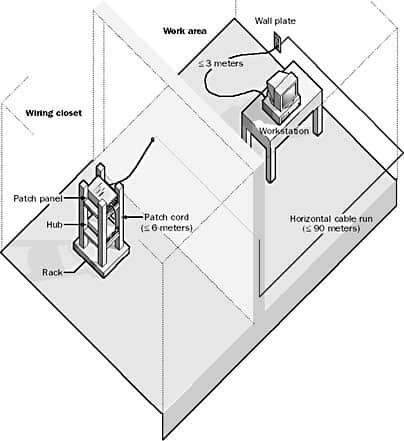
Horizontal Cabling
Horizontal Cabling, in premise cabling, is any cabling that is used to connect a floor’s wiring closet to wall plates in the work areas to provide local area network (LAN) drops for connecting users computers to the network.
-
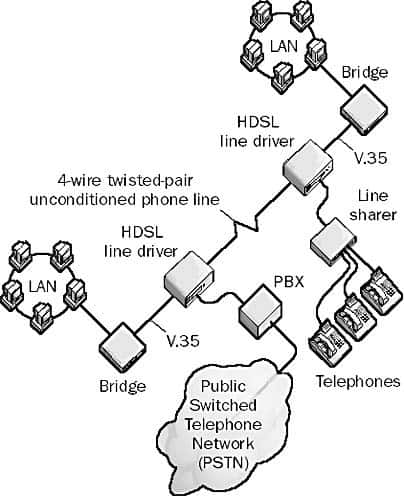
High-bit-rate Digital Subscriber Line (HDSL)
HDSL, or High-bit-rate Digital Subscriber Line, is a modulation technology similar to Asymmetric Digital Subscriber Line (ADSL) that uses a group of existing copper twisted-pair subscriber telephone lines to transmit data at T1 or E1 speeds.
-
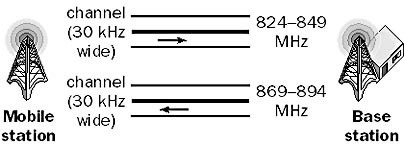
Frequency Division Multiple Access (FDMA)
FDMA (stands for Frequency Division Multiple Access) is the signal multiplexing technology used in the Advanced Mobile Phone Service (AMPS) analog version of cellular phone technology. Learn all about this topic reading the full article.
-

Route Flapping Demystified: Causes, Impacts, and Mitigation Strategies in Dynamic Networks
Flapping, in computer networking, is a problem condition that can occur with dynamic routers on large internetworks. Learn all about flapping-routers reading this article.
-

File-Transfer Access and Management (FTAM)
File-Transfer Access and Management (FTAM) is an ISO standard, part of the Open Systems Interconnection (OSI) suite of protocols, designed to enable file transfer and management operations between different systems.
-
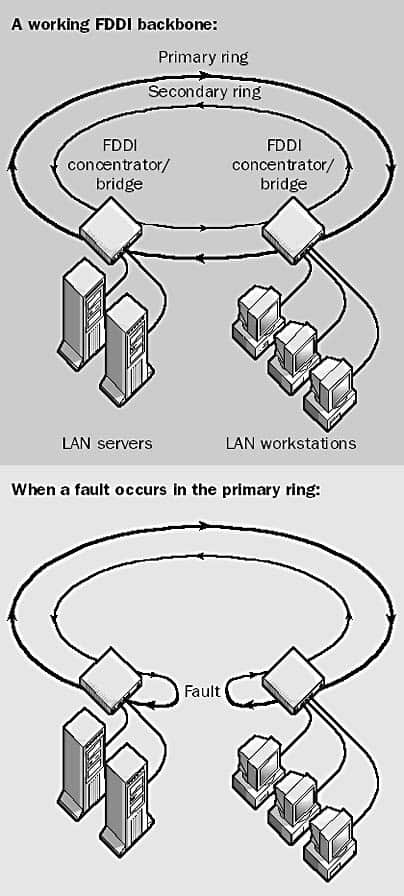
Fiber Distributed Data Interface (FDDI)
Fiber Distributed Data Interface, or FDDI, is a high-speed network technology which runs at 100 Mbps over fiber-optic cabling, often used for network backbones in a local area network (LAN) or metropolitan area network (MAN).
-

Exterior Gateway Protocol (EGP): Navigating Complex Networks
EGP, or Exterior Gateway Protocol, is a type of routing protocol used to distribute routing information between different autonomous systems in large internetworks based on the TCP/IP protocol.
-
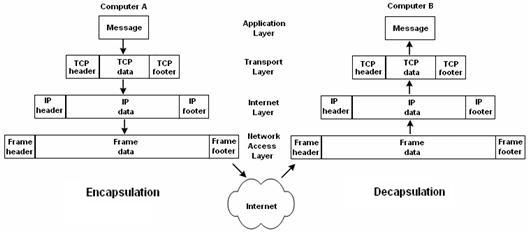
Encapsulation in Networking
Encapsulation is a process by which a lower-layer protocol receives data from a higher-layer protocol and then places the data into the data portion of its frame.
-
Electronic Industries Alliance (EIA)
EIA was the main trade organization representing the U.S. high-tech community. The Electronic Industries Alliance (EIA) was founded in 1924 as the Radio Manufacturers Association.